Children’s Craft: Memorial Day Wind Streamer

Oh, Martha Stewart. How do I love thee? Let me count the ways…

This photo is accredited to marthastewart.com

This photo is accredited to marthastewart.com

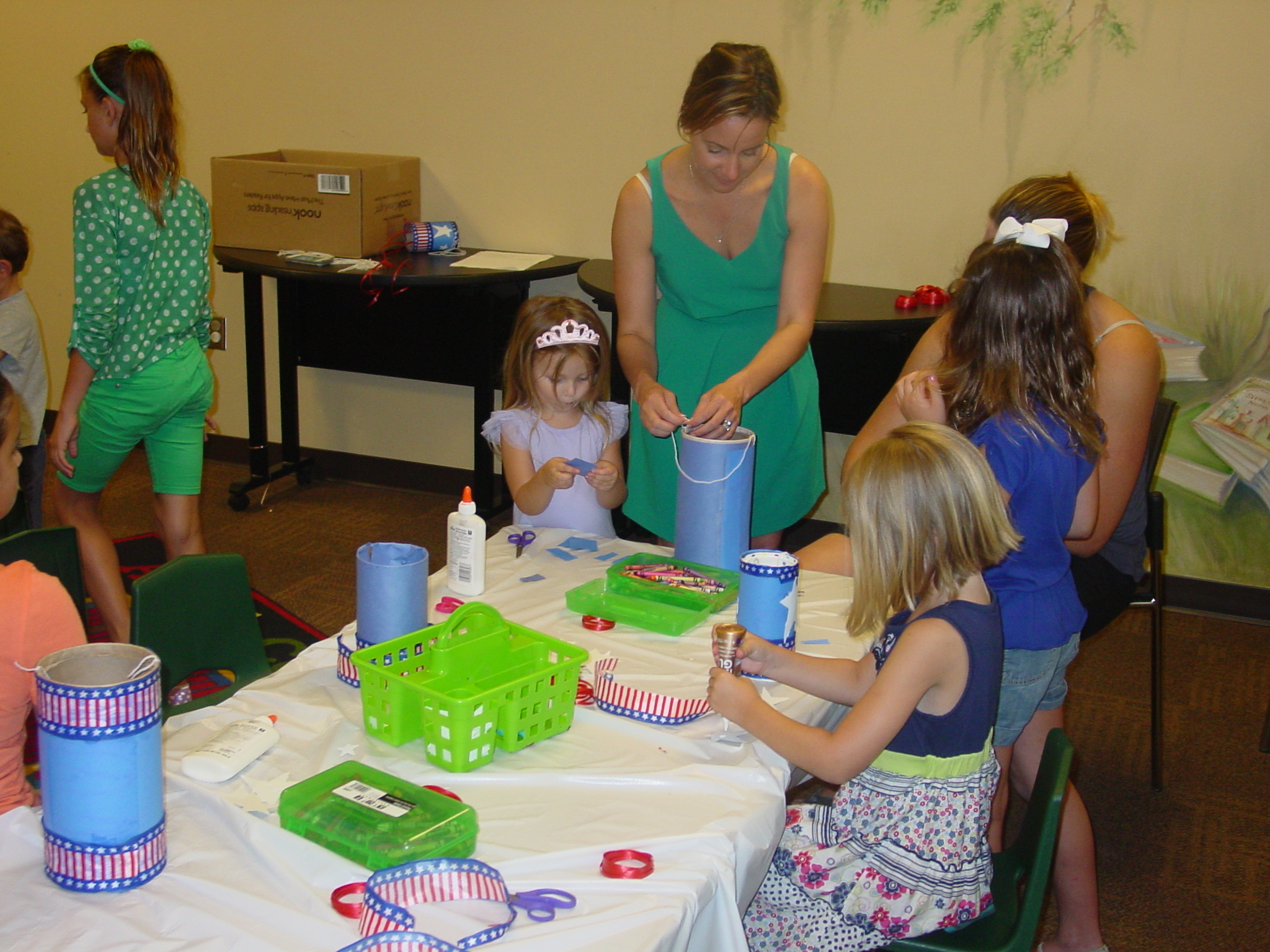
Our May Memorial Day craft comes to you courtesy of Martha Stewart’s webpage, where detailed directions on how to make our lovely, patriotic wind streamer can be found.

Supplies:

– blue construction paper

– red and white ribbon

– white, cut-out stars

– glue sticks

– cardboard oatmeal containers

– a box cutter

You’ll need to make use of your Ellison Die machine for this one. I highly recommend pre-cutting both the stars and the ribbons to their appropriate lengths. It will also take a fair amount of time to cut the bottoms out of the oatmeal containers. Make sure you do so ahead of time to avoid pressure at the last minute.

This craft is a lot of fun and is pretty user-friendly. It also appeals to a wide age range; both our preschoolers and elementary-aged students enjoyed this one. 🙂

025

028

May Military Book Display

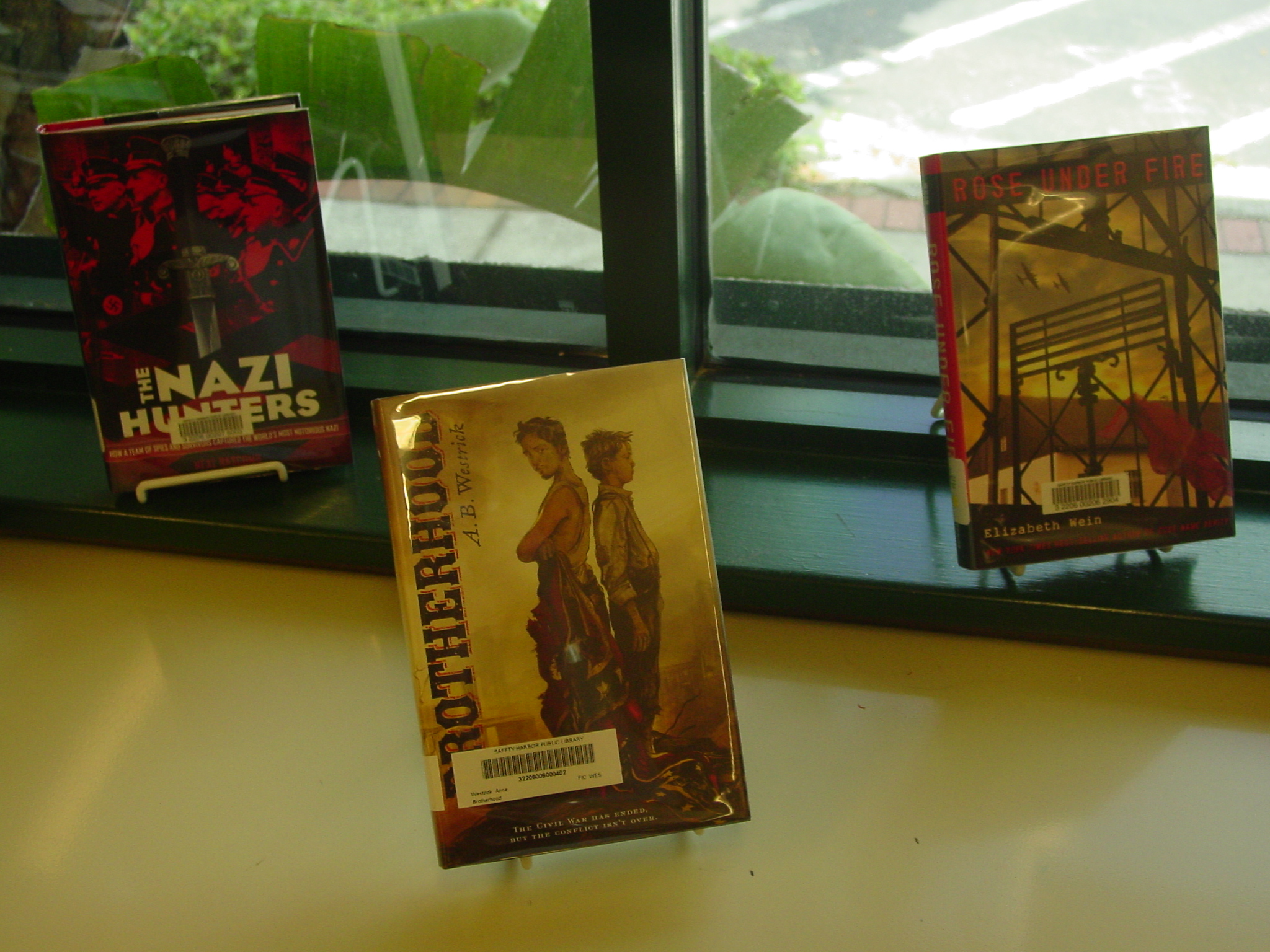
Since May is “Military Month” at the Library (due to Memorial Day), I decided to put together a book display of both fiction and nonfiction featuring US veterans and soldiers. I think it’s all to easy for those of us who don’t come from military backgrounds to overlook the sacrifices these brave men and women have made. So I wanted to do something special to honor them this month.

I decided to incorporate a letter box for Operation Gratitude. For those of you unfamiliar with this organization, Operation Gratitude drops care packages for service members overseas. These packages contain everything from chocolate to books to letters, so I wanted to encourage my teens to express their gratitude by making custom cards. I placed construction paper, scissors, and markers in the middle of the display (bordering them with military books on both sides). The end result was an interactive and attractive display.

DSC01747

og

DSC01748

Thus far, we’ve had eighteen tweens and teens make cards and place them in our box. Exciting, right?  That’s one of the highest participation rates for a passive program yet! So if you’re looking for a fun and meaningful May display, I’d highly recommend military month! My tweens and teens agree. 🙂

DSC01733

Recommended Books:

Divided We Fall by Trent Reedy

Brotherhood by A.B. Westrick

The Killing Woods by Lucy Christopher

The Impossible Knife of Memory by Laurie Halse Anderson

Sunrise Over Fallujah by Walter Dean Myers

The Nazi Hunters by Neal Bascomb

Spiderella (aka “The Fractured Fairy Puppet Show”)

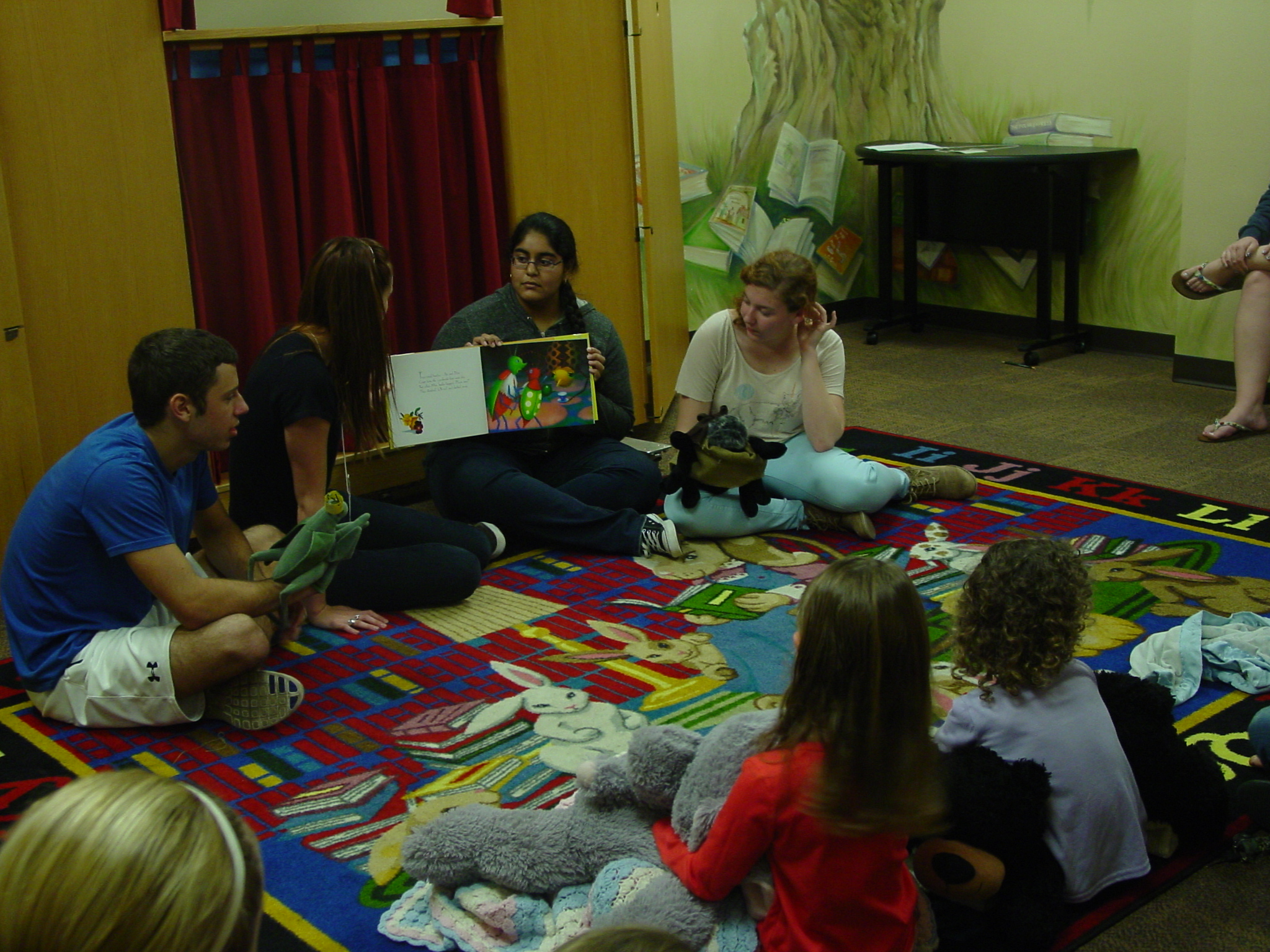
DSC01410One of my favorite programs at our library is our “Starlight Puppet Show & Story-time.” During this event, we invite all of our kids (ages 10 & under) to come to the library at night. Everyone dresses up in their pjs and brings their favorite stuffed animal or blanket. Then they all settle in for 30 minutes of puppets and story telling.


It truly is a special and dearly loved program. Despite the late hour, we still average 15-20 little ones in attendance.

It’s also exciting because it gives our teen volunteers an opportunity to lead. Our more charismatic teens help serve as puppeteers and interact with the kids.

DSC01409

Our most recent puppet show featured the story of Spiderella: a retelling of the Cinderella story. With bugs. 🙂 It was a tremendous hit with our kids. Afterwards, we read a few Miss Spider picture books.

I think we’ll continue to use fractured fairy tales as part of our puppet shows in the future. If you’re looking for ideas, I highly recommend 12 Fabulous Funny Fairy Tale Plays as a resource.

DSC01406

DSC01407b

Yuck @ the Library: Salty Soda Balloons

???????????????????????????????For this month’s “Yuck @ the Library” science program, I wanted to teach the kids about atoms, molecules, and chemical reactions. Not an easy task for little minds! Molecules and atoms are very abstract subjects and can often be hard to grasp. So I decided to do the Salty Soda Balloon Experiment to illustrate what happens when two different chemical molecules interact (especially under pressure).

Supplies:

– a bottle of coke

– a water balloon

– salt

– measuring spoons

This activity requires some hand-eye coordination skills. Consequently, I’d recommend keeping your participants in the 6-12 year old range.

Step 1: The Lesson

With the help of some volunteers, I explained that molecules are made up of atoms and that molecules get “really excited” when they meet other molecules that are different from themselves. I used this information to explain the concept of nucleation sites, which is how the salt latches on to the CO2 in our soda to “ride” up out of the bottle in a fizzy, gaseous, gush!

ssballoons3???????????????????????????????

Step 2: The Demonstration

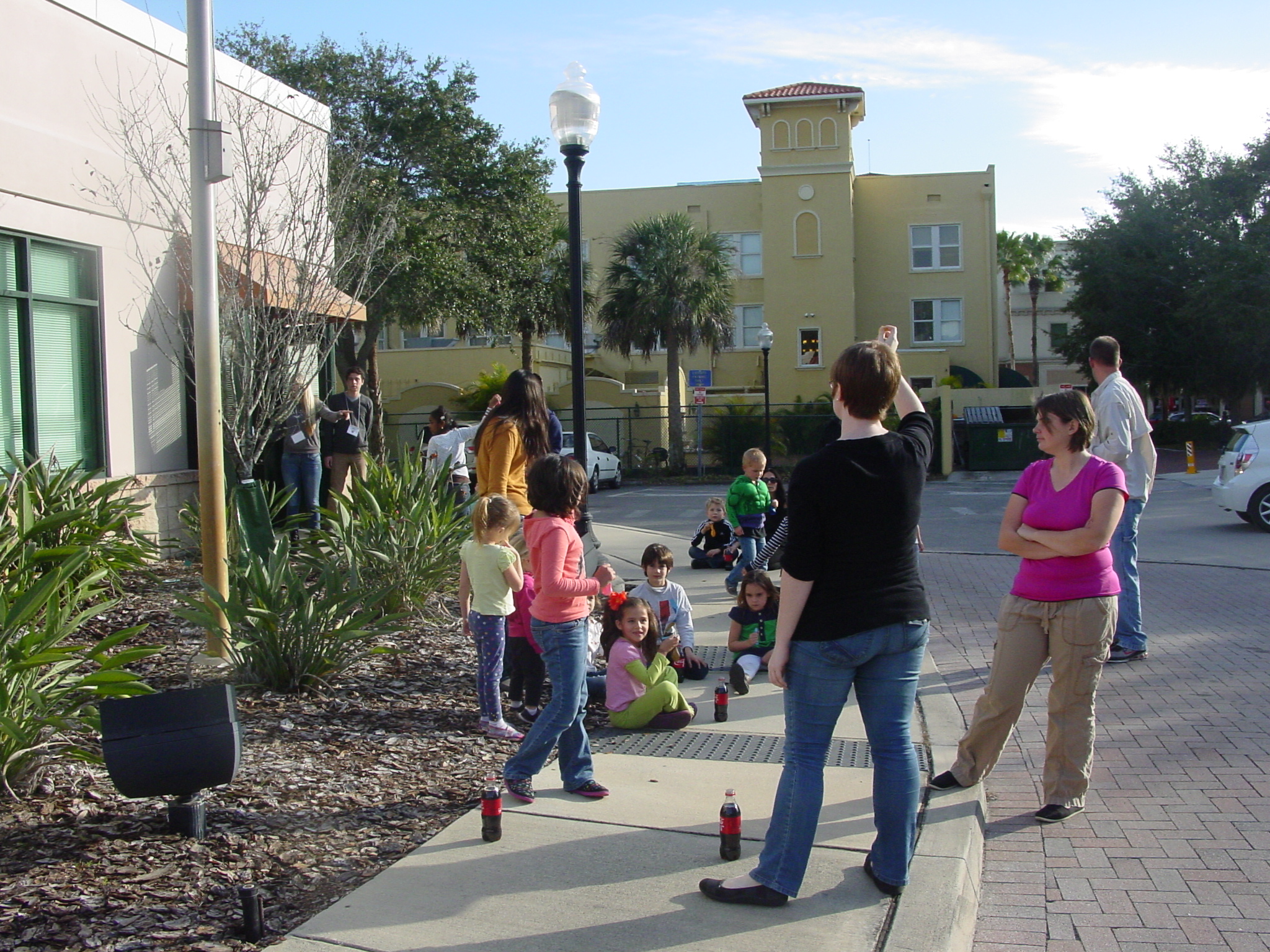
I carefully had the kids pour salt into their water balloons. Then we went outside, attached our balloons to our Coke bottles, and watched the chemical reactions!

DSC01395

DSC01398All in all, our kids had a fantastic time with this activity! I’d highly recommend this one. Just make sure you do it outside!

Privacy in the 21st Century

privacy

In his article,“2014: The Year of Counterveillance,” journalist Robert Siciliano points out the pervasiveness of privacy issues over the last year. From Edward Snowden and the NSA to Facebook’s new policy’s (which state that they can keep your data in perpetuity and use your images in their advertisements), numerous events throughout 2013 have highlighted just how little privacy we have in this modern, technological era and how easily it is violated (Siciliano, 2014, para 2). What’s more, these issue are not going away. As evidenced by latest techno-privacy threat, Heartbleed, our privacy issues are only going to increase in gravity as technology progresses.

I was one of those 40 million Target customers affected by their credit card data compromise. I bought a $2 soda in the check-out line with my debit card and it cost me my financial security. Thankfully, my bank was quick to notice, protected my accounts, and provided me with a replacement card. But I was left feeling more than a little shaken and vulnerable. It’s unsettling to think about just how easily our data can be mined. For example, if I visit a website in one internet tab with Facebook open in another, I’ll start seeing ads in my Facebook bar based on that web activity within a 24 hour period.  It’s uncanny. It’s also a little horrifying.

The fact that even our simplest activities being so closely analyzed feels like something straight out of a science fiction. Only the dangers are far too real, as pointed out by Daniel Sovlove (2008) in his article, “The Future of Privacy”:

Government agencies are mining this personal data, trying to determine whether a person is likely to engage in criminal or terrorist activity in the future based on patterns of behavior, purchases, and interests. If a government computer decides that you are a likely threat, then you might find yourself on a watch list, you might have difficulty flying, and there might be further negative consequences in the future (p. 58)

I can’t speak for everyone, but the way data mining is going feels a little too akin to 1984 for my taste. Such analytic measures as the ones mentioned above verge on “thought policing” and are the stuff of sci-fi nightmares.

So what, then, is our responsibility as 21st century information professionals? How can we protect patron privacy our current times?

First and foremost, we need to adhere to ALA policy and staunchly resist any efforts at data mining aimed at our patrons. We are one of the last bastions of privacy left and we need to defend that role. Demanding reasonable cause for information requests from the government (particularly under the PATRIOT Act) is vital.  As Rubin (2010) points out, “patrons will not use materials or make inquiries regarding controversial topics if they believe such actions are not free from public exposure and governmental intrusion” (p.  391).  The last thing our patrons need is an extension of the data mining intrusions they already experience online. As librarians, we must take care to be discrete with our patrons’ circulation information.

On a more practical level, many patrons who engage in online activities are unaware of just how easily they can be taken advantage of. How many times have we heard of seniors being taken in by Nigerian prince scams and the like? Or younger patrons being sexually harassed by online predators? Since part of the library’s mission is educational in nature, librarians could consider offering classes in online safety for all ages to better equip our patrons to protect themselves. We cannot control the data mining efforts of every business and government entity. We can, however, arm our patrons with the information necessary to make intelligent decisions.

 A final thought: when privacy is threatened, so too is freedom of speech – which is the very bedrock of our democratic society. At the risk of sounding alarmist, we must do our best to protect this right in our role as information professionals. Otherwise, we run the risk of loosing the freedom we so dearly cherish.

References

Rubin, R.E. (2010). Foundations of library science.  New York, NY: Neal-Schumann Publishers, Inc.

Siciliano, R. (2014). 2014: The year of counterveillance. Huffington Post. Retrieved from:

http://www.huffingtonpost.com/robert-siciliano/2014-the-year-of-counterv_b_4622697.html

Sovlove, D. (2008). The future of privacy. American Libraries, 39, 56-59.

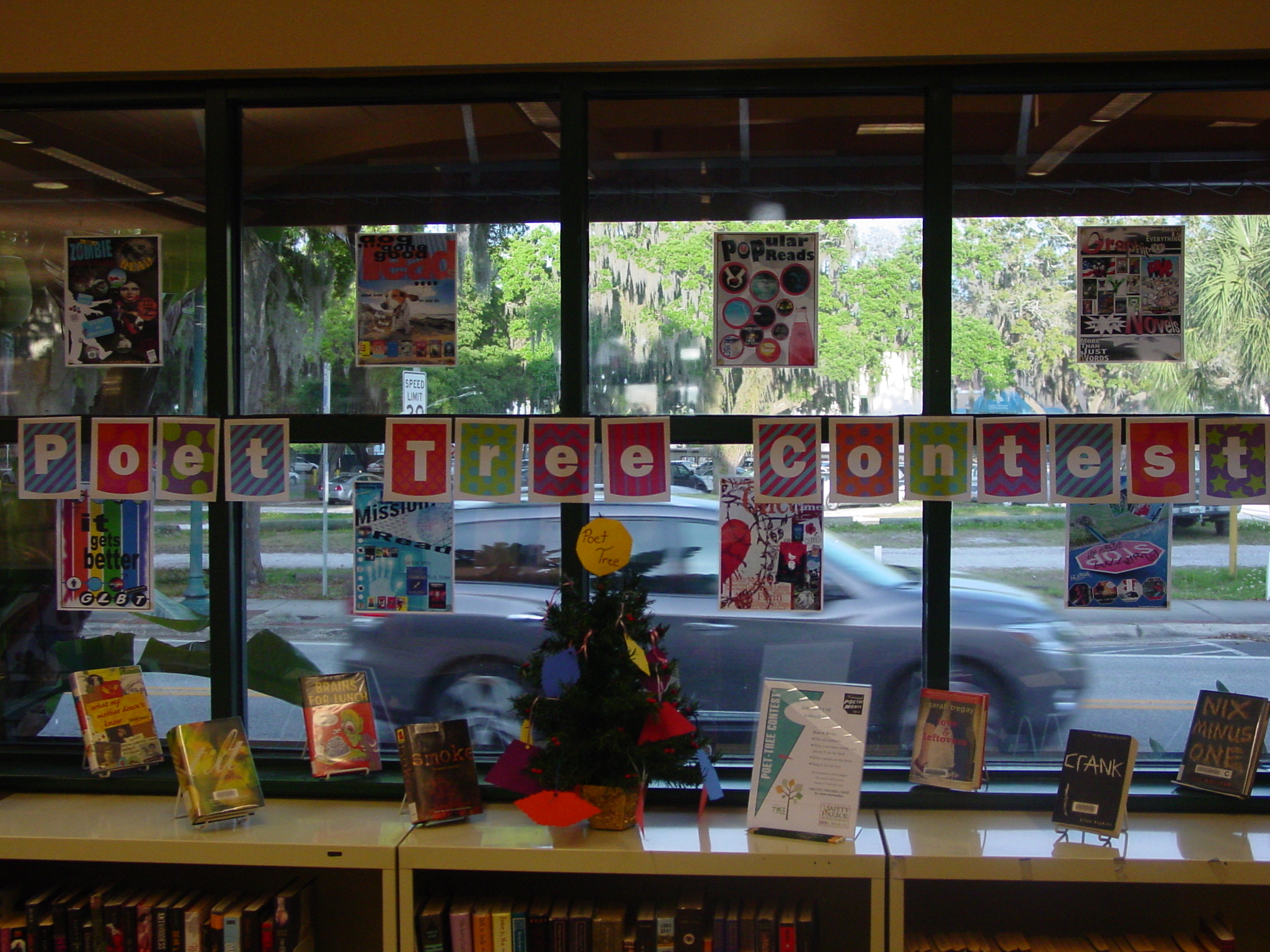
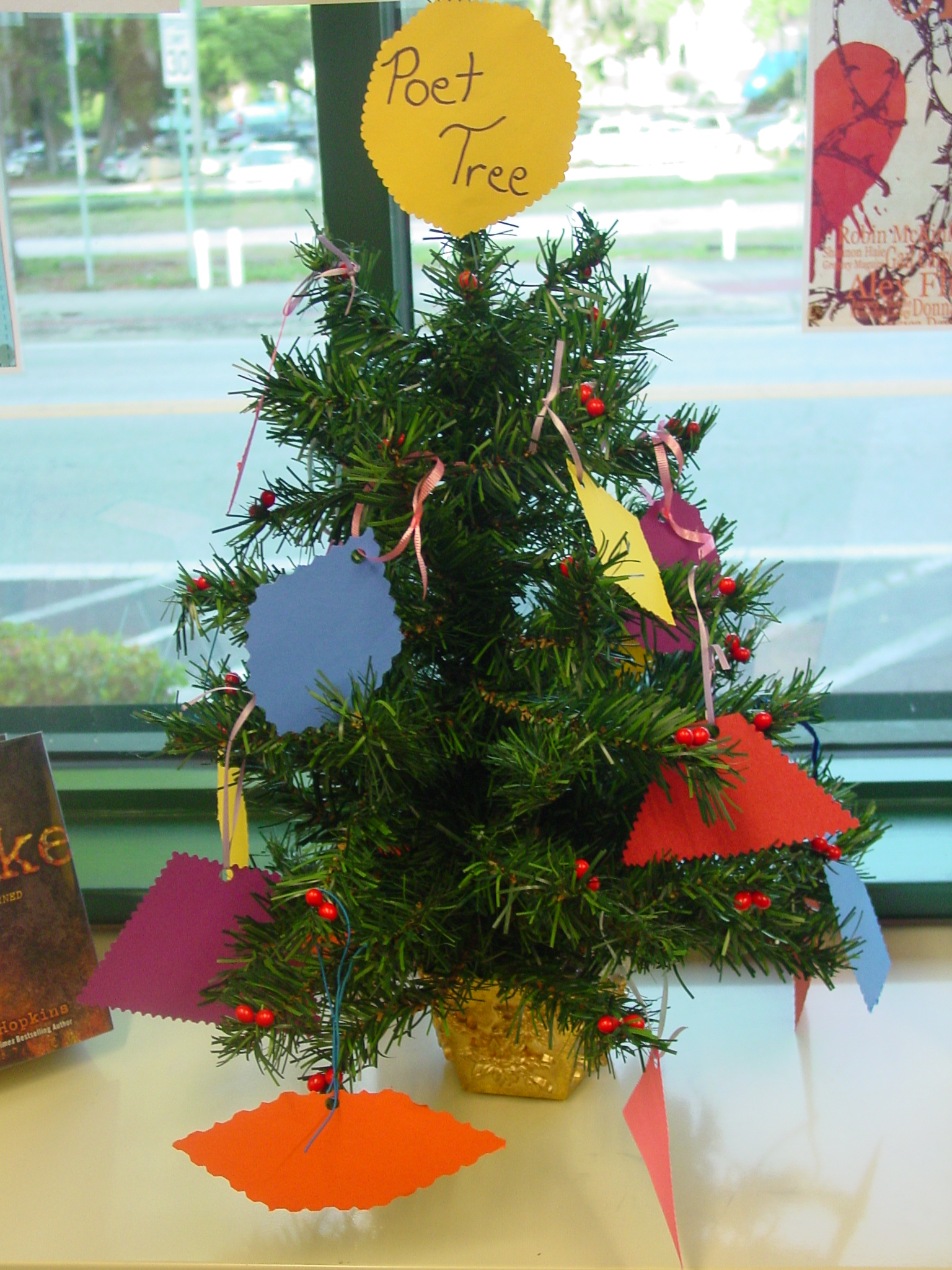
Poet-Tree Display

I wanted to do something fun to celebrate National Poetry Month. I specialized in poetry in my undergrad program, so it holds a special place in my heart.

DSC01685

I stole the idea for this display from Pinterest (a great resource for book displays). The only difference is that I’m turning our “tree” into a contest. Each tween or teen will write their contact info on the back of an ornament; their poem will go on the front. At the end of the month, the librarians and I will judge the poems. The winner will get a Barnes & Noble gift certificate. 🙂

I also put out some verse novels to complement the tree. All and all, I think it turned out well. Happy National Poet-Tree Month!

DSC01686

Frozen Movie Party

frozen movie party

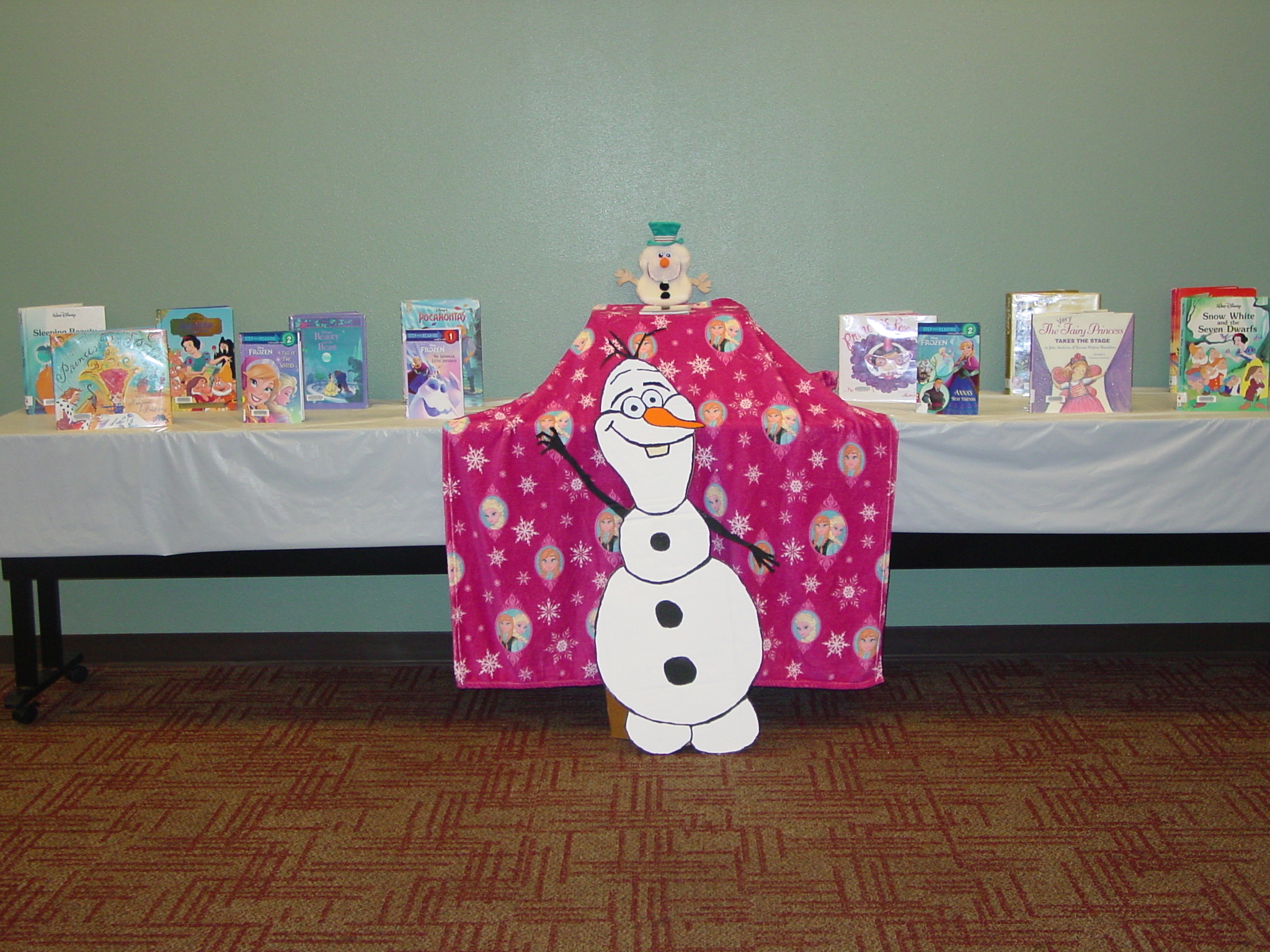
One of the biggest lures in children’s and teen programming is movies. Especially if that movie happens to feature not one but two Disney princesses. Since we knew the kiddos would be going stir-crazy during Spring Break, we decided to host a showing of Disney’s Frozen.  So I thought I’d be that librarian, brag, and share the photos here.


Front Display:DSC01655

Because we always want to include a literary component, even when we show movies, we pulled a few Frozen books (along with other princess stories). We arranged them at the front of the room with our cardboard Olaf standee. The kids then perused the books and took pictures with Olaf.

Station 1: Snowflake Cookies

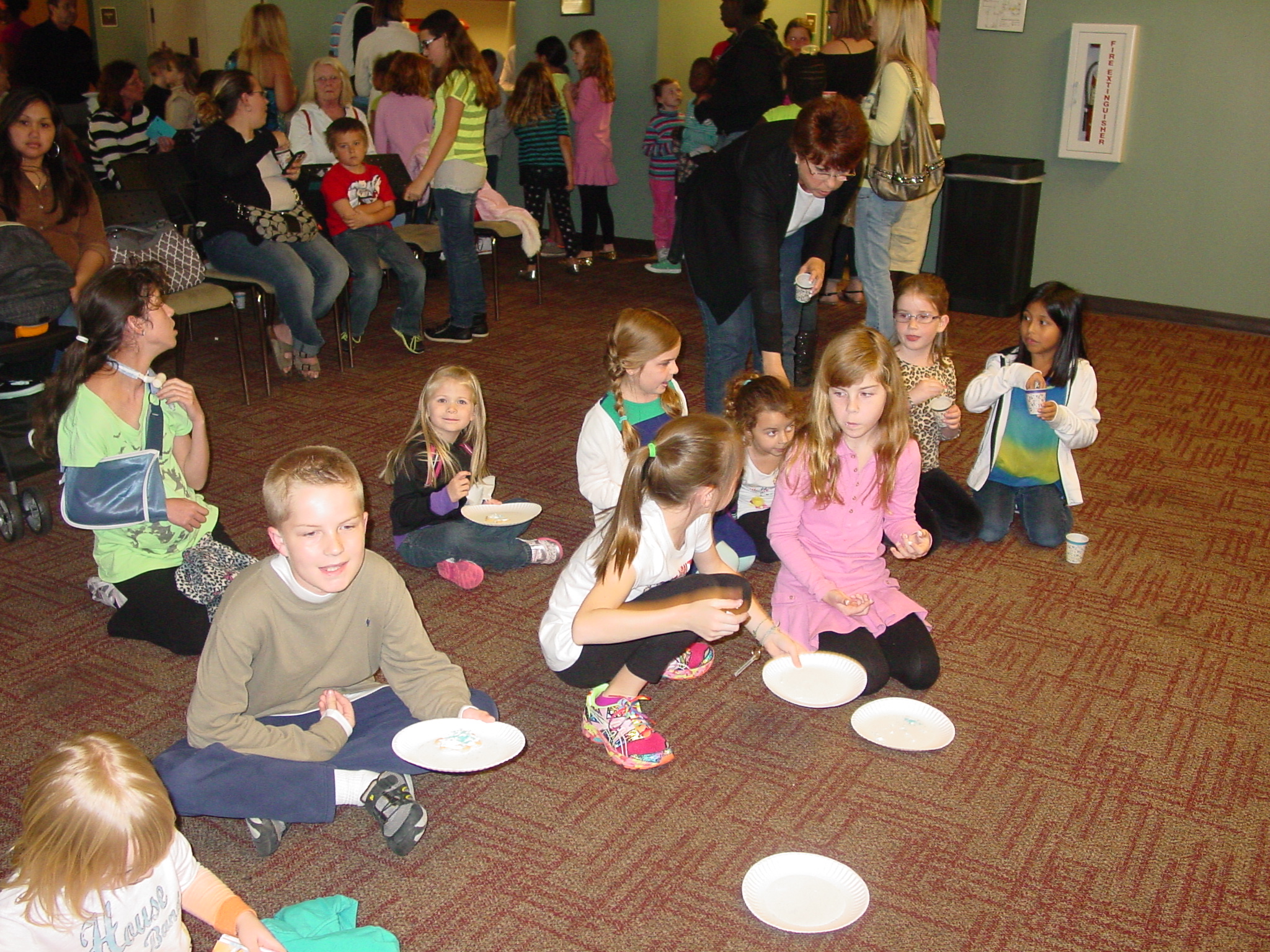
I spent three, unholy hours baking snowflake sugar cookies. We provided vanilla frosting and blue sprinkles so the cookies would look “snowy.” Each child was allowed to have one cookie to decorate.

DSC01669

Station 2: Tiaras, Antlers, and Coloring Sheets

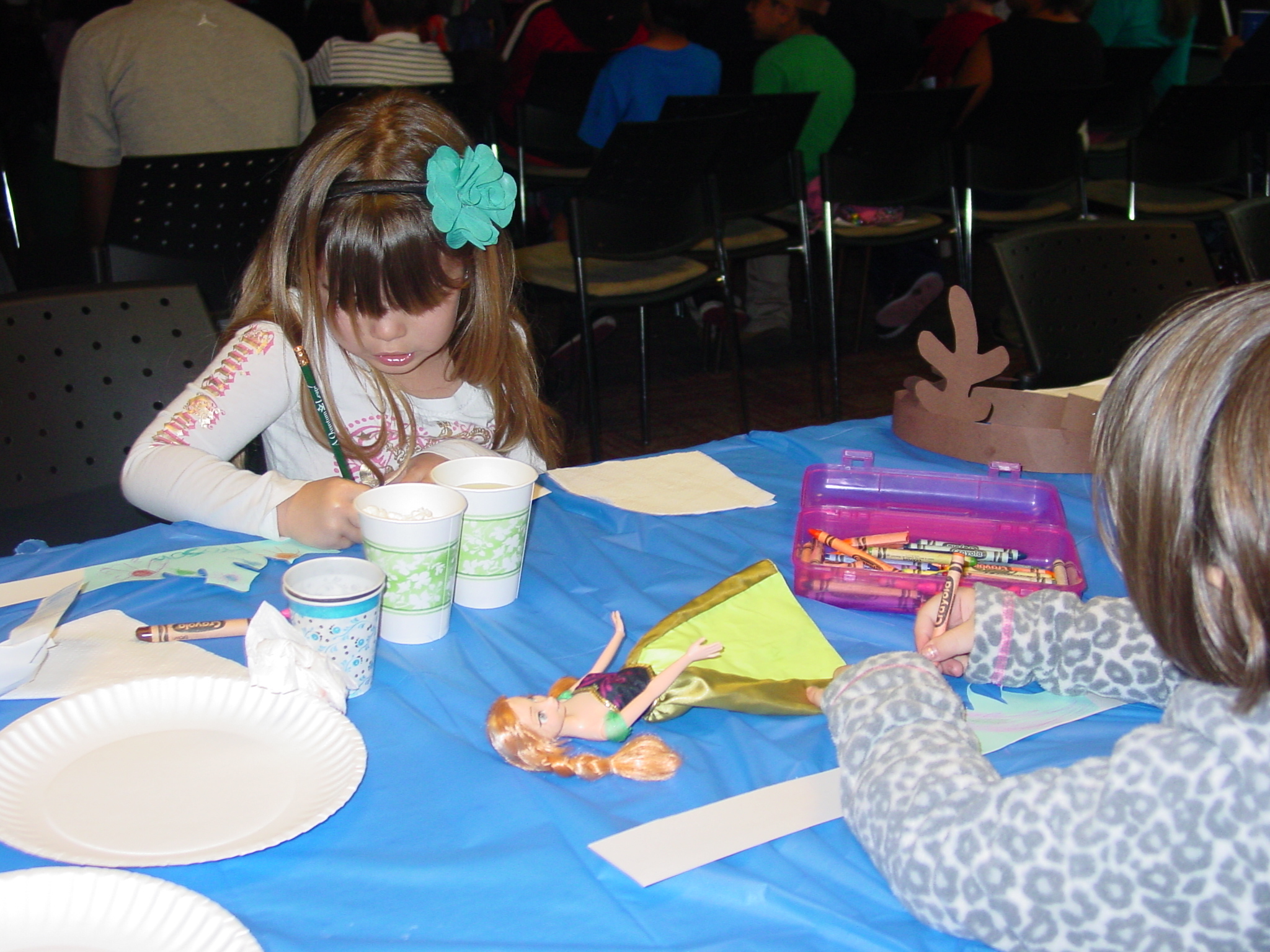
We pre-cut antler and tiara “hats” out of construction paper. We borrowed the templates for them from My Sister’s Suitcase. Each child decorated the hat of their choice, then we helped them fit it to their head. We also provided Frozen coloring sheets that we were able to download online. Those sheets were especially useful because they kept our fidgety little ones busy while their older siblings watched the movie.

DSC01667

DSC01671

DSC01675

Station 4: Movie Time

We arranged the chairs into rows with an aisle, leaving a big space in the front so little ones could sit on the floor if they chose. Then we fired up our old-timey popcorn maker, turned off the lights, and “let it go!”

DSC01665

DSC01666

DSC01674

In total, we had 175 children and parents attend! Not bad for a Spring Break program. 🙂

Caminar Giveaway: And the Winner is…..

*Drum-roll*

After a highly sophisticated selection technique, in which I dropped all the names of the entrants in to a bowl and had a third party (my boyfriend) draw one, I’m pleased to say the winner of a signed copy of Caminar is…


A.B. Westrick!

Anne, please email me at theloudmouthlibrarian@gmail.com with your snail mail address to confirm.

Don’t forget: if you didn’t win, you can still purchase Skila’s novel at Amazon, Barnes & Noble, and IndieBound.

Author Interview and Book Giveaway with Skila Brown

Caminar-hi-res-180x271It’s here! The launch day of Caminar! To celebrate, I’m interviewing the lovely Skila Brown! Skila is a fellow alumna of Vermont College of Fine Arts and Caminar is her debut novel.

We’ll also be giving away a signed copy of her book to one lucky commenter! So read on and leave a thoughtful response in the next 24 hours for a chance to win!

Here’s the official synopsis:

Set in 1981 Guatemala, a lyrical debut novel tells the powerful tale of a boy who must decide what it means to be a man during a time of war.

“Carlos knows that when the soldiers arrive with warnings about the Communist rebels, it is time to be a man and defend the village, keep everyone safe. But Mama tells him not yet—he’s still her quiet moonfaced boy. The soldiers laugh at the villagers, and before they move on, a neighbor is found dangling from a tree, a sign on his neck: Communist.

Mama tells Carlos to run and hide, then try to find her. . . . Numb and alone, he must join a band of guerillas as they trek to the top of the mountain where Carlos’s abuela lives. Will he be in time, and brave enough, to warn them about the soldiers? What will he do then? A novel in verse inspired by actual events during Guatemala’s civil war, Caminar is the moving story of a boy who loses nearly everything before discovering who he really is.”

Powerful stuff, to say the least. And now, on to Skila! 🙂

What inspired you to write Caminar?skila

 “After over a decade of researching the story of Guatemala’s violent conflict, the story of Carlos was just bursting to come out. I didn’t set out to write it, but found I couldn’t write anything else until I did. I was certainly inspired by actual massacres perpetrated by the army in Guatemala and the accounts of survivors, especially children, from that period. I think the story of survival is a universal story that every reader, no matter the age or background, can identify with.”

What made you decide to write the novel in verse instead of prose?  How did this decision affect your writing process?

“Caminar came to me as poems. I assumed I’d be taking those poems and turning them into prose, but the poems just kept coming and they seemed to be a good fit. My drafting process quickly became: Hand-write the beginnings of a poem in a notebook. Move on and do the same thing with other poems. Return to notebook and reread. Find one poem to further develop. Keep working on it until I can see the shape of the poem in my head. Type it into the computer. And then repeat. Repeat. Repeat. I write out of order which can be frustrating at times and messy, but also refreshing and fun.”

Caminar is written from the prospective of Carlos: a Guatemalan boy. Did you experience any challenges while writing across gender and culture?

“Oh, yes. I don’t know how I could answer this question succinctly and do it justice, but by far this was my biggest struggle. First with the issue of whether or not I should even be telling this story and then later with making sure I was telling it in a way that was respectful and of service to the culture it represents. It was something I thought about at every step of the process, with every word I wrote, and with every revision I did. It’s something I think about still.”

skila-childSince it’s set during the Guatemalan Civil War, what sort of research did you do for Caminar?

“I’ve read numerous books, both secondary accounts and primary ones, written by survivors of the violence, and perused many news articles. I spoke with many people who lived through that period of turmoil, and I had the good fortune to have some of them read my story and offer up a critique on the cultural nuances of it. Living in Guatemala for a bit allowed me the chance to tangibly experience Carlos’s setting in a way that I otherwise wouldn’t have been able to do.”

How did you maintain the balance between realistically portraying Carlos’ wartime experiences without overwhelming younger readers?

“This was certainly a challenge. I had a few descriptive lines about the violence that were hard to let go of, but I knew they would be too much for the youngest of readers. I tried to really make use of white space and metaphors instead of spelling things out with sharp, concrete words. Poetry, I think, also allows readers to digest the story at a level that’s appropriate for them. A younger reader will get the gist of what’s happening without extreme detail, while teens and adult readers can read between the lines and really absorb the tragedy that unfolded.”

What advice do you have for aspiring writers of historical and/or multicultural fiction?

“Researching historical fiction can sometimes be overwhelming. How do you know what to read? When to start writing? I think a good rule of thumb is to start with secondary sources, which can give you a good overview of the time period and also provide a framework for any controversies you’ll encounter among the research. Once you have an overview, dig right into primary accounts, whenever possible. Keep a journal and write down whatever details interest you. You don’t know what you’ll use at that point and it doesn’t matter. This is all really the brainstorming stage. After you have a story in your head and you can see it, you might be ready to write. But you’re definitely not done with research. You can keep your research going, even while you’re drafting, this time on a targeted level, looking for the specific details you need in a particular scene.”

If there’s one thing you’d like readers to take away from your novel, what would it be?

“Remembering is powerful. It can keep alive what others try to silence.”

Any new projects on the horizon?

“I just finished up another verse novel, also historical, this time YA, set in the 1840s. And I’m getting ready to dive into a new historical YA novel that I’ve been researching for several months. I don’t think this one will be in verse, so I’m excited to see how my writing process might be different.”

canstockphoto12279317

Many thanks to Skila for letting me interview her!  It was an absolute pleasure. Happy Book Birthday and best of luck on your continued writing journey.

Don’t forget to comment today for a chance to win a signed copy of Caminar. And, in case you don’t win, Skila’s novel can be purchased from:


indiebound

b&n

amazon